
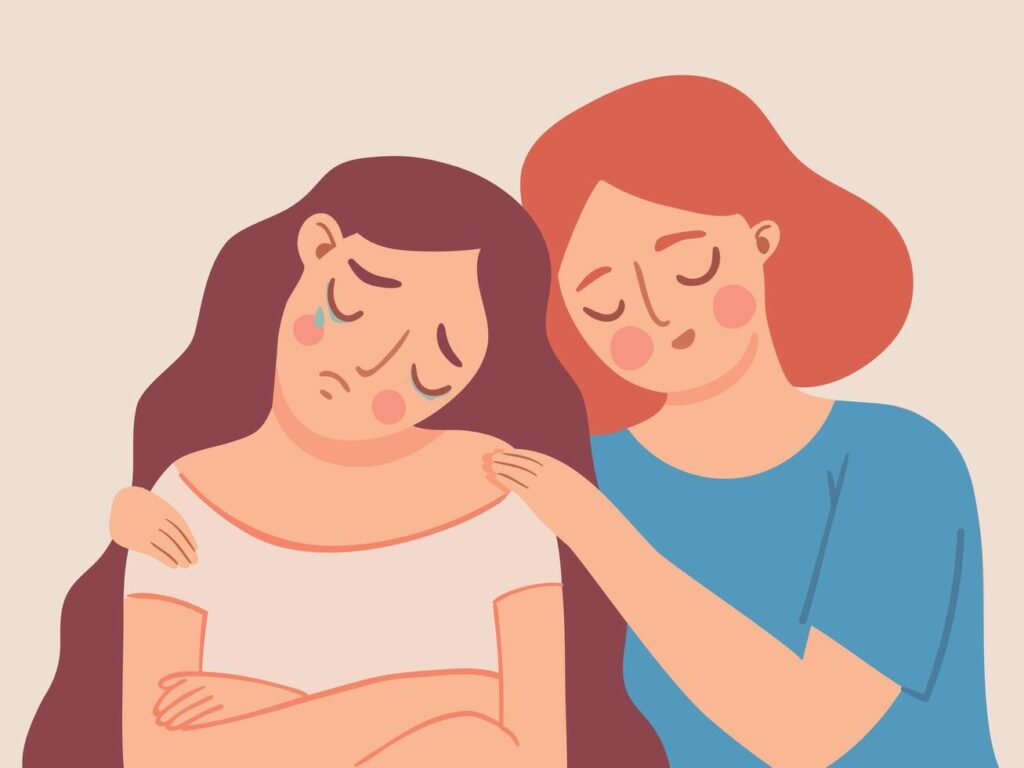
Offering Help, Caring for Yourself and Respecting Boundaries
Supporting a friend who is experiencing domestic violence is not about having all the answers, but walking beside them with patience, care and understanding.
In Part 1, we explored how to be a safe space and how to listen. In Part 2, we focus on how to offer healthy, practical, and sustainable ways to offer support.
Offer Practical No Pressure Support
You can’t “fix” the situation, but supportive and small actions can make a powerful and meaningful difference for your friend.
You can:
- Assist with small tasks if they need extra support.
- Help them explore resources like support lines, women centres, or shelters.
- Offer safe ways to stay in touch.
The key is to offer support, not force it. Let them choose what feels right for them.
What to Avoid
Some best intentions can also unintentionally cause extra harm.
Try to avoid:
- Taking control of the situation.
- “Why don’t you just leave?”
- Speaking negatively about their partner in a way that might feel overwhelming.
- Pressuring them into a decision.
These type reactions/responses can increase shame, isolation or fear.
Understand That Leaving Isn’t as Simple as it Might Seem
Leaving an abusive situation can be one of the most dangerous, challenging and complicated situations.
There may be:
- Concern for children or family members.
- Emotional attachment.
- Fear of retaliation.
- Financial dependence.
Your role is not to rush the process but to show your full support through the entire journey.
Gently Encourage Support
If you know they are open to it, help guide them towards additional support from trained professionals.
Let them know:
- There are safe and confidential resources available.
- They don’t need to go through this alone.
- Help is available for them.
Sometimes them knowing support options exist can plant a seed of hope in their heart.
Take Care of Yourself
Helping a friend through abuse can be emotionally heavy and draining for yourself.
It’s very important too:
- Seek your own support if you need it.
- Recognize that you cannot carry this alone. You also need support.
- Set healthy boundaries.
Final
You don’t need perfect solutions or words to support a friend experiencing domestic violence.
What matters most:
- Consistency.
- Patience.
- Compassion.
Your support could be the very reason they feel less alone and feel more empowered to decide their next step.
Reflection
- How can I continue showing support, patience, and compassion?
- How can I offer support without taking control of the situation?
- What boundaries do I need to maintain my own well being?