
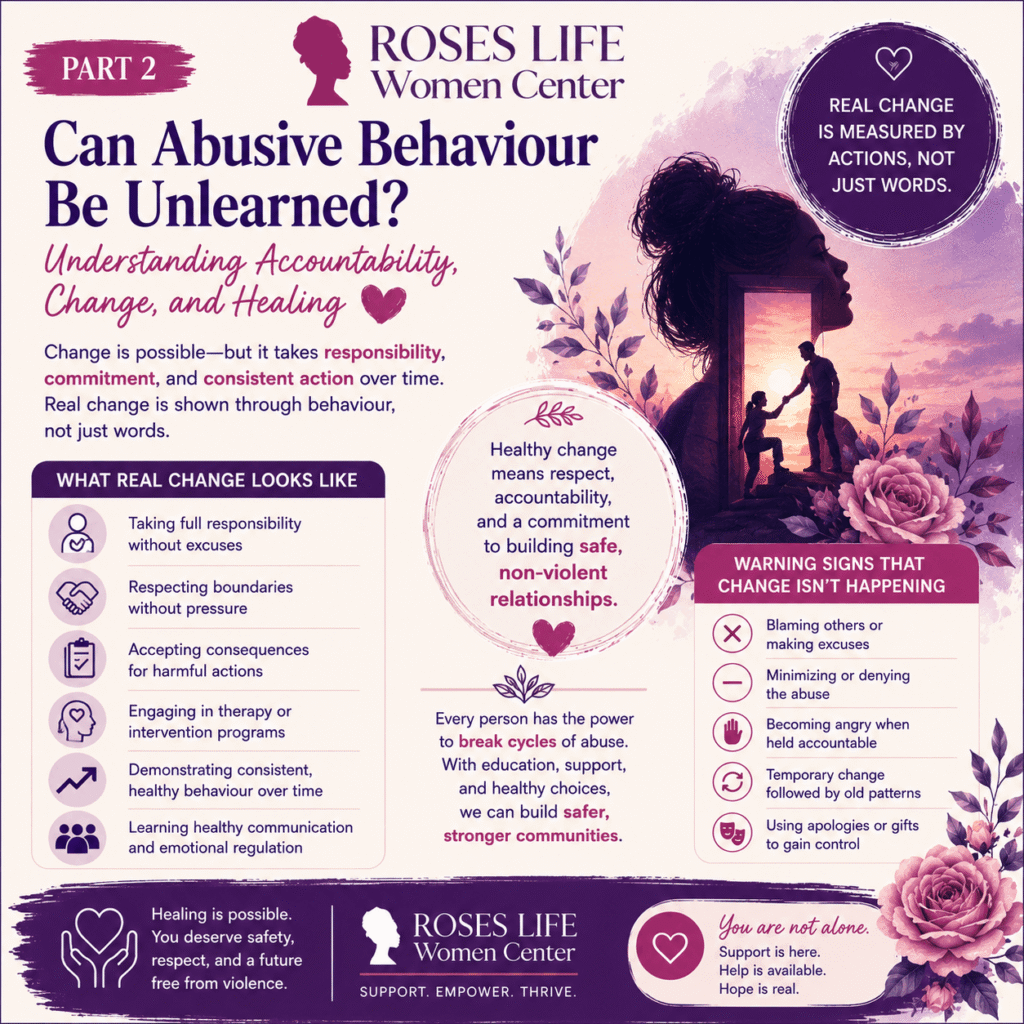
Understanding Change, Accountability, and Healing
After learning that abusive behaviour can potentially be learned by living in unhealthy environments or experiences, there is another important question that often follows:
“Can an abusive person change?”
This is a very complicated answer. Some people can change harmful behaviours, but true change requires long term effort, accountability, and genuine commitment to giving up harmful patterns and control.
At Roses Life Women Center, we believe conversations about abuse must remain survivor centred while also educating communities about prevention, accountability, and healing.
Can Abuse Be Unlearned?
Experts agree that abusive behaviours can potentially be unlearned, but change is not guaranteed or easy. According to The National Domestic Violence Hotline, meaningful change only happens when the abuser fully accepts the responsibility of their actions instead of blaming trauma, stress, the victim, or substances.
True behavioural change can involve:
– Understanding the harm that was caused.
– Participating in specialized intervention programs.
– Acknowledging the abuse without excuses.
– Consistent long term behavioural changes.
– Respecting accountability and boundaries.
– Learning healthy communication and emotional regulation.
Temporary apologies or short moments of improved behaviours are not the same as lasting changes.
Why Change Can Be Difficult
Abusive behaviours are often connected to patterns of manipulation, entitlement, control, or unhealthy beliefs about relationships. These patterns become deeply rooted over time. Some individuals may struggle to change due to:
– Minimize the harm caused.
– Becoming defensive when confronted.
– Deny that the abuse happened.
– Use apologizes to regain control rather than changing behaviour.
– Blame others for their actions.
Without accountability, abusive patterns will often continue.
What Healthy Change Looks Like
Genuine change is generally visible through consistent actions over time, not just promises. Signs of true effort can include:
– Respecting boundaries without pressure.
– Engaging in long term intervention programs or therapy.
– Taking full responsibility.
– Demonstrating healthier behaviour consistently over time.
– Accepting consequences for harmful actions.
Healthy change is measured by accountability, safety, and respect.
Survivors Are Not Responsible for Fixing Abuse
An important reminder for survivors is: Understanding abuse doesn’t mean you are responsible for fixing someone else’s behaviour.
Many survivors stay in harmful situations hoping love, patience, or support will create a difference. While people are capable of growth, lasting change can only happen if the abuser wants to take accountability.
Your emotional wellbeing, safety, and healing matters.
Breaking Cycles Through Education and Support
Preventing abuse starts long before violence even happens. Emotional regulation, respectful relationships, healthy communication, and community support all play a big role in breaking harm cycles.
At Roses Life Women Center, we are dedicated to supporting women through emotional support, trauma informed care, advocacy, community education, and safety planning. Through support and awareness, healing and prevention become possible.
A Future Free From Violence
Accountability, prevention, and healing all require community involvement. By continuing conversation about trauma, boundaries, healthy relationships, and emotional safety, we help create safer futures for women, children, and families.
If you or someone you know needs support, Roses Life Women Center is here to help.
